


by Jo Wrigley, Kaiwhakakaha/CE, GoEco
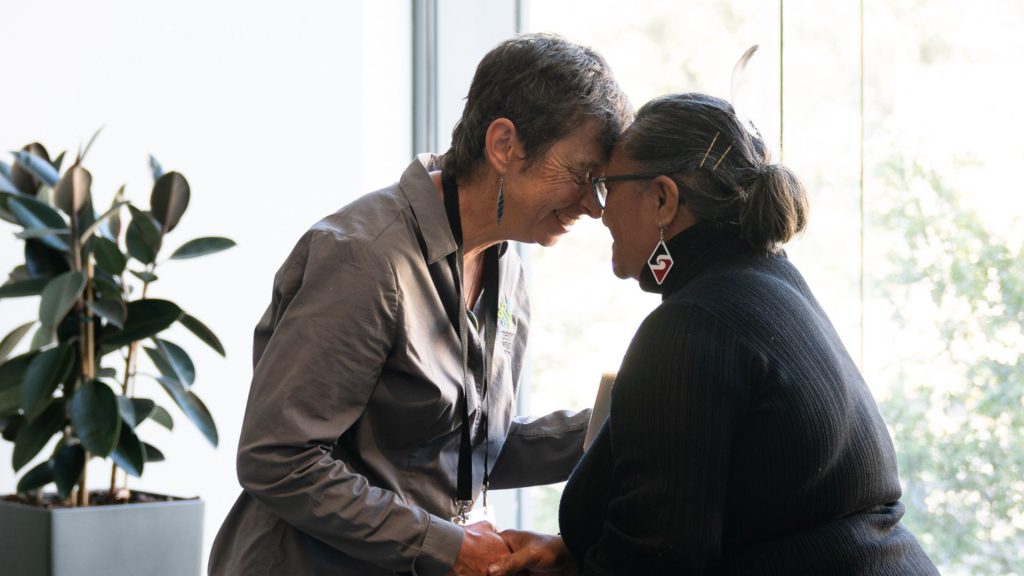
Te Tiriti is not simply about inclusion within existing systems, but about reimagining those systems entirely.
In 2021, the Go Eco Trust Board formally committed to Tangata Tiriti practice development, recognising that honouring Te Tiriti requires ongoing change in how governance and operational systems are designed, connected, and lived. This article shares learning fromthat commitment. It offers reflection, responds to questions we continue to sit with, and (hopefully) provides provocation for organisations navigating similar work. In particular, it invites consideration of systems that move in connected rhythm and cycles, resisting the grind of short-term growth spurts in favour of long-term, relational, and systemic change.
Our practice acknowledges that anti-racism must begin with how rules are made, rather than how behaviour is managed. Tangata Tiriti practice must be understood as an obligation to honour Te Tiriti, rather than an identity claim or branding exercise. And meaningful climate actions such as zero waste, must engage with constitutional transformation and the ongoing realities of colonisation.
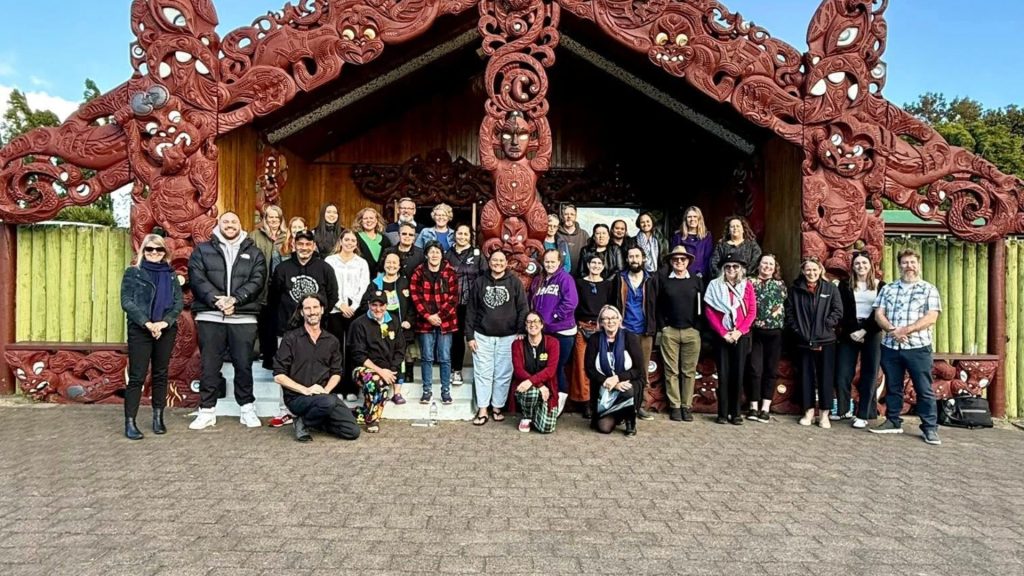
If our leadership was truly anchored in Te Tiriti, whose voices would we centre and what would we stop doing to make space for that?
Anchoring leadership in Te Tiriti requires us to examine which voices our systems currently privilege and where the power to decide sits.
Centring tangata whenua aspirations means we relinquish control, slow our processes, and accept that outcomes may look different to what institutions are accustomed to recognising. Tiriti centred leadership recognises who holds responsibility for whenua and whakapapa because hapū never ever ceded sovereignty. Systems of circularity ask us to stop designing for speed and individual performance, and instead create conditions that value relationship, collective sense-making, and accountability that is demonstrated through ongoing practice rather than one-off outputs.
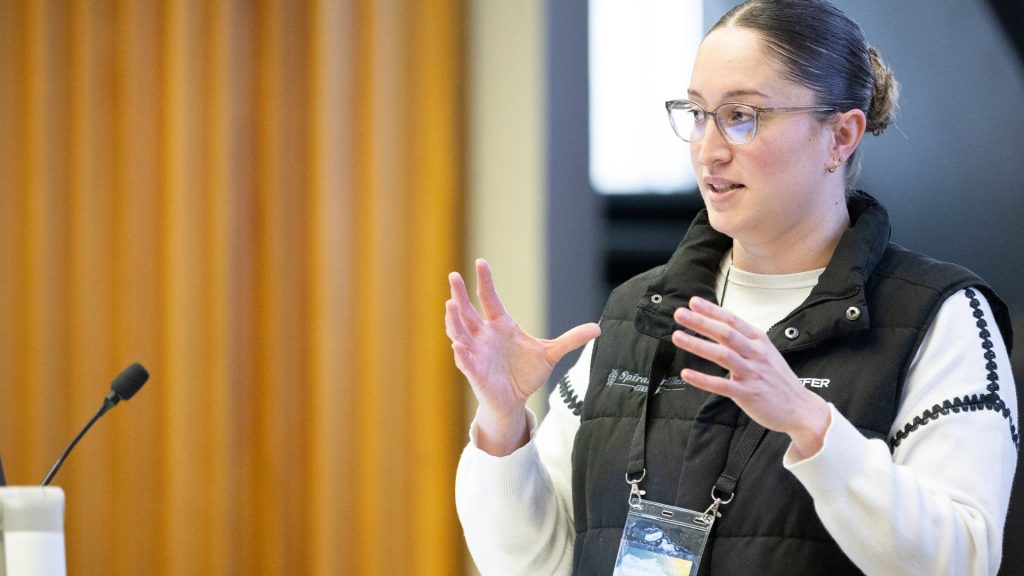
When did you last take a risk that truly shifted control and redistributed power?
Tangata Tiriti practice is measured by risk. Redistribution of power and change always carry uncertainty, particularly for organisations shaped and funded by colonial governance models that reward predictability and control. We have learned that many actions we considered to be best practice were characteristics of white supremacy, understanding the whakapapa of what we do and why we do is a great motivator for dismantling organisational power systems.
Taking real risk means changing who decides. It means shaping organisational direction with Māori-led priorities, even when this disrupts funder expectations or internal comfort. It also means being accountable when those shifts expose gaps in our own capability or preparedness. For other organisations, this question is a diagnostic one: if nothing material has been relinquished, power has not moved. Risk is not a failure of leadership; it is evidence of it.
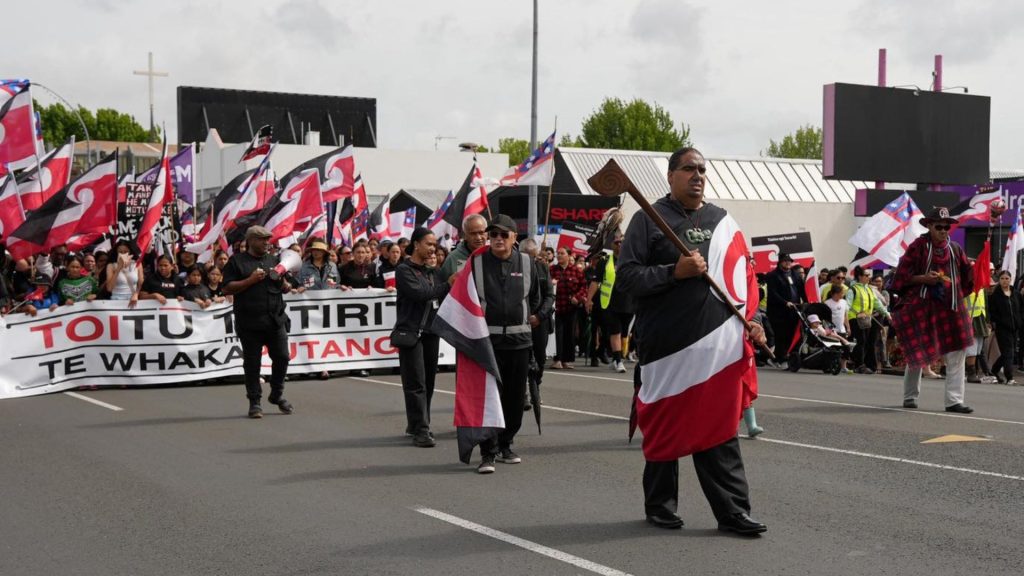
What would it look like to lead at the pace of trust and integrity over urgency?
Urgency is one of the most entrenched colonial habits in organisational life. It frames speed as competence and delay as failure, even when speed erodes trust. We understand that leading at the pace of trust means allowing relationships to set the tempo, rather than project plans or reporting cycles. This approach regularly feels uncomfortable. Trust develops unevenly, requires disagreement, and cannot be rushed without being damaged. Integrity demands that we do not extract knowledge, labour, or legitimacy from tangata whenua to meet external deadlines. Instead, we commit to prioritise presence, listening, and consistency over time.
Leading at the pace of trust does not mean inaction; it means acting in ways that strengthen relationships rather than consume them. For organisations engaging in climate, zero waste and community work, this shift is essential if solutions are to endure beyond funding cycles.
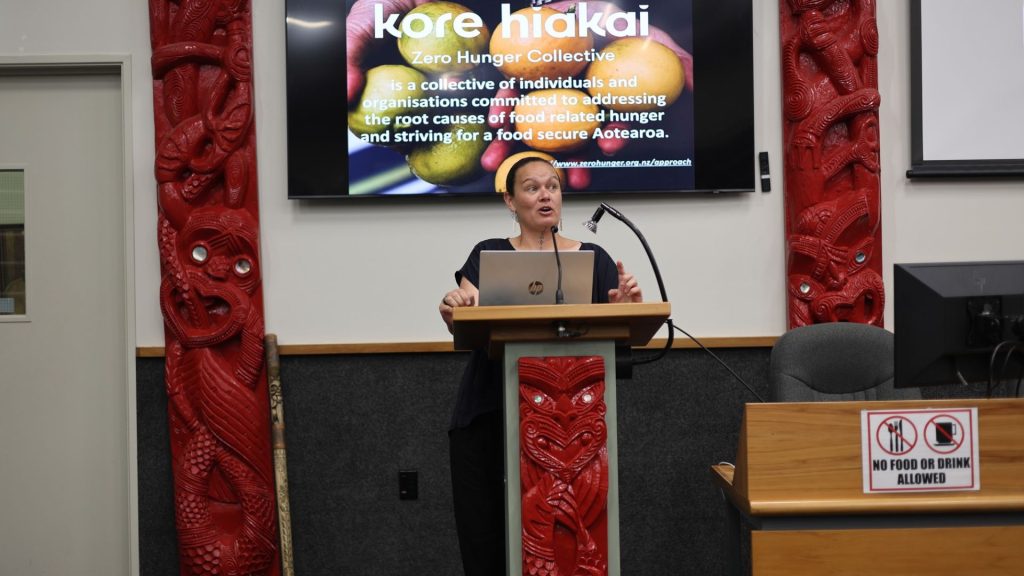
Are your processes designed for participation or are they designed for collaboration and intergenerational partnership?
Engagement and participation often invite people into systems that have already been designed. Collaboration, particularly when grounded in Te Tiriti, requires being in relationship. Hapū and communities have the design and the solution, the challenge for tangata tiriti practice is be in relationship in a way that decentres ourselves. Intergenerational relationship goes further still, asking whether our processes honour past struggles and future responsibilities.
We are increasingly attentive to how our organisational systems function: who sets agendas, how knowledge is validated, and how we experience and support collective learning. Processes designed for collaboration in and between teams allow space for tikanga, for collective deliberation, and for decisions that consider mokopuna not yet born. This challenges efficiency-driven models and strengthens our bi-cultural practice, legitimacy and resilience. For other organisations, this question invites a close look at whether engagement practices genuinely shape outcomes or simply legitimise predetermined decisions.
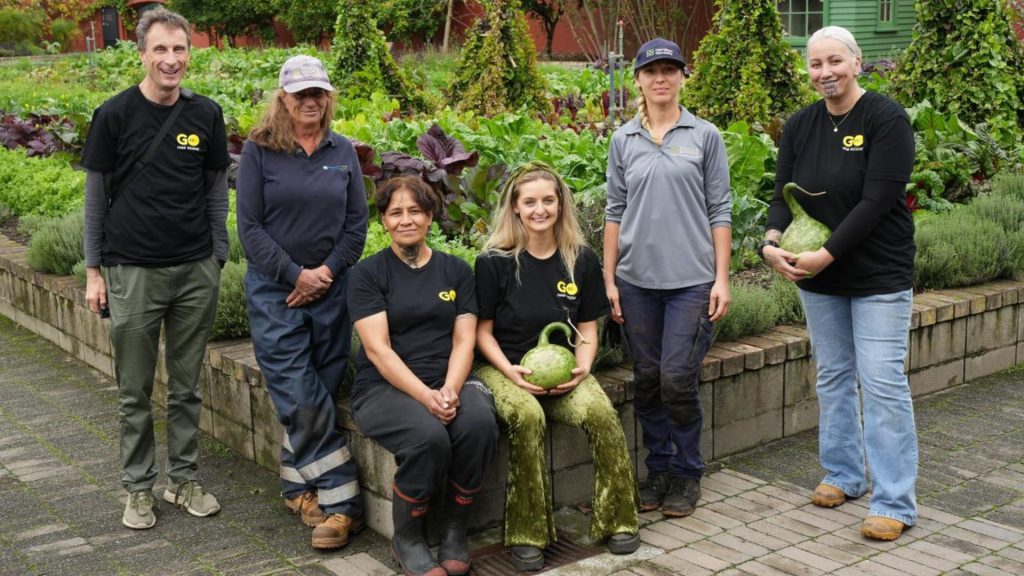
Would tangata whenua recognise themselves in the values that guide your innovation and systems design?
Values statements often claim alignment with Te Tiriti while remaining rooted in Western notions of innovation, growth, and success. We continually ask whether the values guiding our work would be recognisable to tangata whenua not as abstractions, but as lived realities.
This question pushes us to examine whose knowledge informs our systems design and what worldviews are embedded within our tools, metrics, and technologies. Innovation grounded
in Te Tiriti prioritises relationship, reciprocity, and responsibility over novelty or scale. It aligns closely with the constitutional transformation values articulated through Matike Mai, which call for governance grounded in tikanga, rangatiratanga, and collective wellbeing.
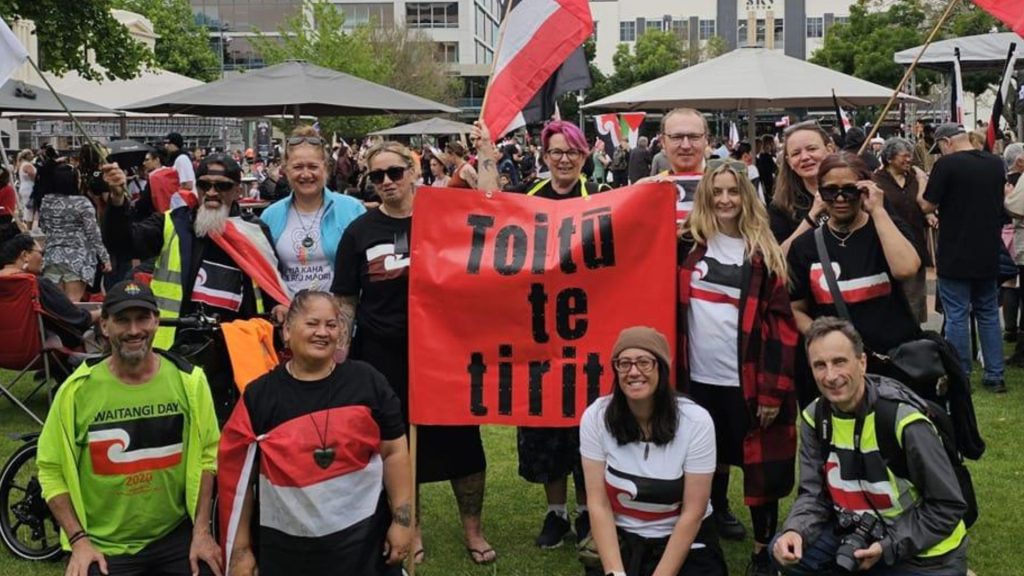
What will be the whakapapa of the decisions you’re making right now and will future generations be able to say you honoured Te Tiriti in them?
This question situates organisational decision-making within a longer horizon of accountability. Every decision carries whakapapa: it emerges from particular histories and shapes particular futures. Tangata Tiriti practice requires us to ask not only whether decisions meet current needs, but whether they honour obligations inherited through Te Tiriti.
We understand climate action as inseparable from this responsibility. Environmental harm is the outcome of governance systems that sever relationships between people and land. Decolonising climate action therefore contributes to constitutional transformation, redefining Aotearoa as a nation founded on Te Tiriti as an agreement rather than a settler entitlement. Future generations will not judge us by our intentions, but by whether our decisions restored or further diminished rangatiratanga, whenua, and collective wellbeing.
Holding this question keeps our work unfinished by design. It reminds us that Tangata Tiriti is not an identity we claim, but a practice we must continually enact. There are no final answers, only ongoing responsibilities. What matters is whether our leadership, systems, and relationships make it possible for those who come after us to say that, in our time, we honoured Te Tiriti in practice and words.
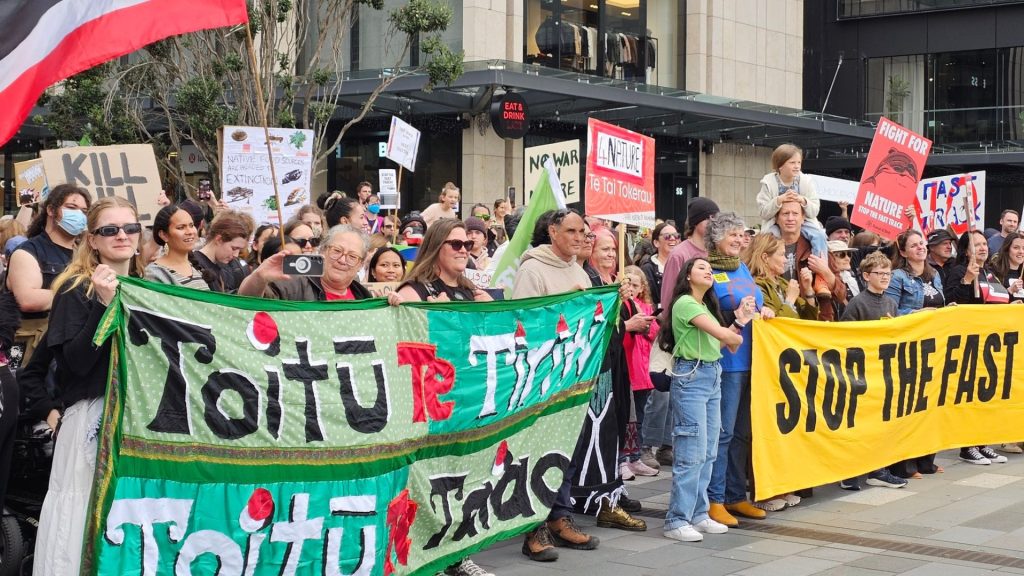
Be sure to catch Jo at the Te Tiriti-based futures conference. She is appearing as part of the Anticapitalism, Antiracism and Intersectionality session on Sunday March 22 at 11:30am. Registration is free.